

What Is Postural Tachycardia Syndrome?
Postural Tachycardia Syndrome (POTS) is a condition that affects the autonomic nervous system, the part of the body that controls automatic functions such as heart rate and blood pressure.
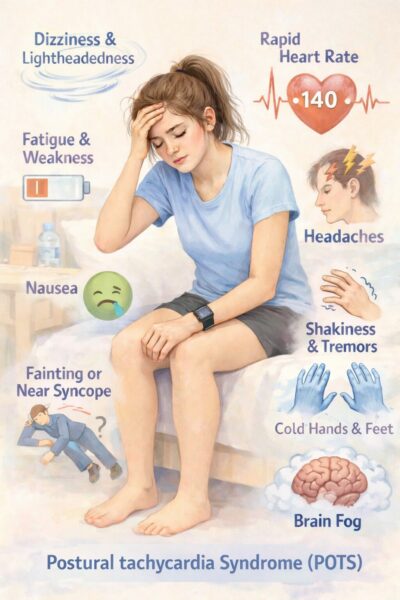
People with POTS experience a significant increase in heart rate when moving from lying down to standing up. This can lead to symptoms such as dizziness, palpitations, fatigue, and sometimes fainting.
POTS is more commonly seen in teenagers and young adults, particularly adolescent girls, but it can affect children and adults of any age.
How the Condition Affects the Body
When a healthy person stands up, gravity causes blood to move towards the legs and abdomen. The body normally compensates by slightly increasing heart rate and tightening blood vessels to maintain blood flow to the brain.
In people with POTS, this adjustment does not work properly. As a result:
Blood pools in the lower body
Less blood reaches the brain temporarily
The heart rate increases significantly to compensate
This can cause symptoms that occur shortly after standing.
Common Symptoms of POTS
Symptoms can vary widely and may change from day to day. Common symptoms include:
Rapid heartbeat when standing
Light-headedness or dizziness
Fatigue or low energy
Palpitations
Difficulty concentrating (“brain fog”)
Headaches
Nausea
Shortness of breath
Exercise intolerance
Some patients may also experience fainting (syncope), although this is less common than in other conditions such as vasovagal syncope.
What Causes Postural Tachycardia Syndrome?
The exact cause of POTS is not always clear. In many patients it appears to be related to dysfunction of the autonomic nervous system.
Possible contributing factors include:
Viral infections
Rapid growth during adolescence
Hormonal changes
Deconditioning after illness or injury
Autoimmune conditions
Genetic predisposition in some cases
In many young people, POTS develops gradually during adolescence.
How Is POTS Diagnosed?
Diagnosis usually involves a careful medical history and physical examination.
Doctors look for a sustained increase in heart rate when standing, usually:
An increase of 30 beats per minute or more in adults
Or 40 beats per minute in adolescents
This increase occurs within 10 minutes of standing without a significant drop in blood pressure.
Tests used to confirm the diagnosis may include:
Stand test or tilt-table test
Electrocardiogram (ECG)
Echocardiogram
Blood tests to rule out other conditions
These tests help ensure that symptoms are not caused by other heart or medical conditions.
Treatment and Management
Although there is no single cure for POTS, many treatments can significantly improve symptoms.
Lifestyle Measures
Lifestyle changes are often the most effective first step:
Drinking more fluids
Increasing salt intake (when appropriate)
Wearing compression stockings
Avoiding prolonged standing
Gradual exercise and physical conditioning
Exercise programs that strengthen leg and core muscles can be particularly helpful.
Medications
If symptoms persist, doctors may prescribe medications such as:
Beta-blockers to control heart rate
Medications that help increase blood volume
Drugs that improve blood vessel tone
Treatment is usually tailored individually.
Long-Term Outlook
The outlook for young people with POTS is generally very good.
Many adolescents experience gradual improvement over time, particularly with lifestyle measures and physical conditioning.
While symptoms can sometimes be frustrating, POTS does not usually cause long-term damage to the heart.
With appropriate management and support, most patients are able to return to school, exercise, and daily activities.
Key Points
POTS is a condition causing rapid heart rate when standing.
It commonly affects teenagers and young adults.
Symptoms include dizziness, fatigue, palpitations, and difficulty concentrating.
Diagnosis is based on heart rate changes when standing.
Treatment focuses on hydration, exercise, and sometimes medication.
Most young people improve over time.