Heart Murmur in Children — Expert Assessment and Reassurance in London
Being told your child has a heart murmur can stop you in your tracks. Even if the doctor seemed calm about it, the word “murmur” stays with you — and as a parent, calm reassurance from a busy GP appointment rarely feels like enough. You want a proper answer, from someone who does this every day.
The good news is that in the great majority of cases, a heart murmur in a child turns out to be completely harmless. But knowing that — really knowing it, based on a thorough specialist assessment rather than a best guess — is what gives genuine peace of mind.
Dr Alessandro Giardini is a Consultant Paediatric Cardiologist working in London, with a senior role in one of the UK’s leading children’s cardiac centre and an active private practice. He has extensive experience assessing babies, children, and teenagers with heart murmurs, and a large part of his practice is devoted to helping families understand clearly whether there is anything to be concerned about.
What is a Heart Murmur?
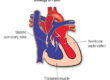
A heart murmur is simply an extra sound heard when a doctor listens to the heart with a stethoscope. It is caused by the movement of blood flow within or around the heart producing a sound that can be detected: a whoosh or swish between the normal heartbeats.
It is important to understand that a heart murmur is not a diagnosis in itself. It is a finding, a description of what is heard, and what that sound means depends entirely on its characteristics and the clinical picture around it.
The majority of murmurs simply reflect normal blood flow through a perfectly healthy heart. They do not indicate disease, they do not cause symptoms, and they require no treatment.
How Common Are Heart Murmurs in Children?
Very common indeed. Studies suggest that up to 70 to 80 percent of children will have a murmur detected at some point during childhood. This alone should offer some reassurance: a murmur is not a rare or alarming finding.
The great majority of these are what cardiologists call innocent murmurs, a term that means exactly what it sounds like. These murmurs reflect entirely normal blood flow through a structurally normal heart and carry no clinical significance whatsoever.
Innocent murmurs often become apparent or more audible during particular phases of childhood, including periods of rapid growth, episodes of fever or illness, and after physical activity. In each of these situations, blood flows more quickly through the heart, producing a sound that can be picked up on examination even though the heart itself is completely normal.
When Could a Murmur Indicate a Problem?
A small proportion of murmurs, the minority, may reflect an underlying structural condition. The most common include a small hole in the heart (such as a ventricular or atrial septal defect), narrowing of a heart valve (stenosis), or other changes in the pattern of blood flow through the heart’s chambers or great vessels.
In many cases these findings are mild and may never cause a problem. However, identifying them early matters: it allows appropriate monitoring to be put in place, and if treatment is ever needed, it can be planned at the right time rather than reactively.
This is precisely why a clear specialist assessment is valuable even when a child appears entirely well.
When Should You Seek a Specialist Assessment?
Whilst many parents seek an opinion simply for reassurance, which is entirely reasonable, there are specific circumstances where a specialist cardiology review is particularly important. These include:
- Breathlessness, especially during feeding in a baby or during exercise in an older child
- Poor weight gain or faltering growth in an infant
- Chest pain during or after physical activity
- Palpitations or episodes of blackout or near-fainting
- Blue or dusky discolouration of the lips or skin
- A family history of congenital heart disease or of sudden unexplained cardiac death
If any of these features are present alongside a murmur, prompt specialist assessment is advisable. And even in a child who seems perfectly well, many parents in London and across the South of England choose to arrange an expert review simply because certainty is more valuable than uncertainty.
What Happens During the Consultation?
The assessment is straightforward, thorough, and designed from the outset to give you a clear answer before you leave.
In most cases the consultation includes a detailed clinical evaluation: taking a careful history of the murmur, any symptoms, the pregnancy and birth history, and any relevant family history, alongside a physical examination and a listen to the heart. This is supplemented in the majority of cases by an ECG (a heart tracing, which is entirely painless and takes only a few minutes) and an echocardiogram, which is an ultrasound of the heart using exactly the same technology as a pregnancy scan, with no radiation and no discomfort.
The echocardiogram is the gold standard investigation for a heart murmur. It provides direct visualisation of the heart’s structure and the pattern of blood flow in real time, allowing the vast majority of murmurs to be classified definitively as innocent or structural within the same appointment.
Most families leave the same day with a clear diagnosis and, in the majority of cases, the reassurance they came for.
Why This Matters
The outcome of a specialist assessment follows one of two paths, and both lead to clarity.
If the murmur is confirmed as innocent, your child can be discharged with complete confidence. There are no restrictions on exercise or sport, no long-term follow-up required, and no reason for ongoing concern. Your child’s heart is normal.
If a structural finding is identified, it can be assessed carefully and put in proper context. The large majority of structural findings detected in well children are mild and require only periodic monitoring rather than any intervention. Where treatment is ultimately needed, identifying the condition early means it can be planned thoughtfully and managed at the optimal time. In either case, knowing is better than not knowing.
Expert Paediatric Cardiology Care in London
Families from London and across the South of England frequently seek a specialist opinion about their child’s heart murmur when they want a clear and definitive answer rather than ongoing uncertainty, when they would like reassurance based on depth of experience rather than a general opinion, or when they prefer a comprehensive assessment (examination, ECG, and echocardiogram) completed in a single focused visit.
Dr Giardini provides exactly this. His assessment is structured, his explanations are tailored to each family, and his clinical practice includes senior responsibilities at one of the UK’s foremost paediatric cardiac centres alongside a busy private practice in London. He has assessed many hundreds of children with heart murmurs and understands both the clinical nuance and the anxiety that brings families to clinic.
About Dr Giardini
Dr Alessandro Giardini is a Consultant Paediatric Cardiologist with many years of experience caring for babies, children, and teenagers across the full spectrum of heart conditions. He holds a senior position in one of the UK’s leading children’s cardiac centres and has a particular focus on providing clear, calm, and thorough assessments for families navigating a new or uncertain cardiac diagnosis.
A significant part of his practice involves the evaluation of heart murmurs, and he is experienced in helping parents understand, in plain language and without unnecessary alarm, whether there is anything that needs attention and what, if anything, should happen next.
His approach is consistent: careful assessment, honest explanation, and reassurance wherever the evidence supports it.
When to Book a Consultation
You may wish to arrange an appointment with Dr Giardini if your child has been told they have a murmur and you would like a specialist opinion, if you have seen another doctor but still feel uncertain and would value a second view, if you would like a comprehensive assessment completed in a single visit rather than across multiple appointments, or simply because you would like the peace of mind that comes from a thorough, expert evaluation.
There is no wrong reason to seek clarity about your child’s heart.
Reassurance: The Key Message
The most important thing to understand about heart murmurs in children is that the great majority are completely normal and entirely harmless. They do not affect life expectancy, they do not limit activity, and they do not require treatment.
But having that confirmed properly, with the right assessment by the right specialist, is what transforms a worrying phrase into genuine peace of mind.
Book a Consultation
If you would like a prompt, expert assessment of your child’s heart murmur in London, you can arrange a consultation directly through this website or by contacting Dr Giardini’s secretary. Most families find that a single visit is all it takes to get the clarity and reassurance they need.
Frequently Asked Questions
Is a heart murmur dangerous in children?
In the great majority of cases, no. Most heart murmurs detected in babies and children are innocent: the heart is structurally normal and the sound simply reflects the way blood moves through it. They are not a sign of heart disease and do not require treatment. The important step is confirming this through a proper specialist assessment, so that the reassurance you receive is based on evidence rather than assumption.
How do I know if my child’s murmur is serious?
In most cases you cannot tell from symptoms or observation alone, because the majority of children with murmurs (even those with a mild structural finding) feel completely well. Certain features do increase the likelihood of a significant murmur: breathlessness, chest pain with activity, episodes of fainting, poor growth in a baby, or a bluish tinge to the lips or skin. The characteristics of the murmur itself on examination also provide important clues to an experienced cardiologist. A specialist review resolves the uncertainty quickly and definitively.
Do all heart murmurs need an echocardiogram?
Not in every clinical situation: an experienced paediatric cardiologist can sometimes provide reassurance on examination alone. In practice, however, an echocardiogram is usually the most reliable and efficient way to give a family a definitive answer, particularly where the murmur has any atypical features or where the parents want complete certainty. It is painless, takes around twenty to thirty minutes, and provides a clear picture of the heart’s structure and function in real time.
Can a heart murmur go away on its own?
Yes, frequently. Many innocent murmurs are variable in nature and may be entirely absent at one examination and audible at the next, depending on the child’s heart rate, temperature, and activity level. Some murmurs that are present in infancy or early childhood disappear entirely as the child grows. This is normal and expected, and it does not indicate that anything has changed within the heart itself.
Can my child play sport with a heart murmur?
In the vast majority of cases, yes, without any restriction. Once an innocent murmur has been confirmed, there is no reason to limit exercise, sport, or any other physical activity. This is one of the most common questions parents bring to clinic, and in most cases it is also one of the most straightforward to answer reassuringly.
What causes a heart murmur in children?
Most heart murmurs arise simply because blood flowing through a healthy heart can produce a sound, particularly when it is moving quickly: during exercise, fever, or a growth spurt, for instance. Occasionally a murmur reflects an underlying structural finding such as a small hole between the heart chambers, a mildly abnormal valve, or an unusual pattern of blood flow. Importantly, the majority are not caused by any structural problem and the heart itself is entirely normal.
Can a heart murmur be the first sign of a heart condition?
Occasionally, yes. A murmur may be the only outward sign of a mild congenital heart abnormality in an otherwise well and active child. This is not common, but it is one of the reasons why a thorough specialist assessment is worthwhile even when a child appears completely healthy. Identifying a structural finding early, even a minor one, allows it to be followed appropriately and managed at the right time.
Should I see a paediatric cardiologist if my child has a murmur?
If there is any uncertainty, whether about the nature of the murmur, your child’s symptoms, or simply because you want a clear and expert answer, then yes. A specialist assessment provides a definitive diagnosis in the large majority of cases at a single visit, with immediate reassurance where the evidence supports it and a clear management plan where it does not. For most parents, the most valuable part of the consultation is simply having the uncertainty resolved.
Dr. Alessandro Giardini, MD, PhD
Written 03/04/2026